5-Min Brief: OpenAI Is Building a Phone. Here's What We Know — and Why It's a Bigger Deal Than It Sounds.
What you need to know — in 30 seconds
- New reports today confirm OpenAI is working on an AI-first smartphone, in partnership with chipmakers Qualcomm and MediaTek, with Luxshare as its manufacturing partner
- Mass production is expected to begin in 2028
- OpenAI CEO Sam Altman posted yesterday that it "feels like a good time to seriously rethink how operating systems and user interfaces are designed" — a rare public signal of direction
- This is separate from the screenless AI companion device OpenAI is also building with designer Jony Ive, expected later this year
OpenAI has spent four years building the world's most used AI software. Now it wants to build the hardware you use to access it.
Reports confirmed this morning by reliable Apple analyst Ming-Chi Kuo detail OpenAI's partnerships with Qualcomm and MediaTek on processors, and with Luxshare — one of Apple's key manufacturing partners — on system design and production. Mass production is targeted for 2028, meaning this is still years away. But the intent is now clearly real.
The same day Kuo's report dropped, Altman posted on X that it "feels like a good time to seriously rethink how operating systems and user interfaces are designed" and added that the internet "should have a protocol that is equally usable by people and agents." That's not accidental timing. Altman rarely posts about hardware unprompted.
Why OpenAI wants its own phone
To understand why this makes strategic sense, you need to understand what OpenAI's actual problem is.
ChatGPT is extraordinarily capable. But it lives inside an app, on a phone designed by Apple or Google, running an operating system built by Apple or Google, with AI features built by Apple or Google sitting one layer below it at all times. Every time someone picks up their iPhone and asks Siri something instead of opening ChatGPT, that's a loss for OpenAI.
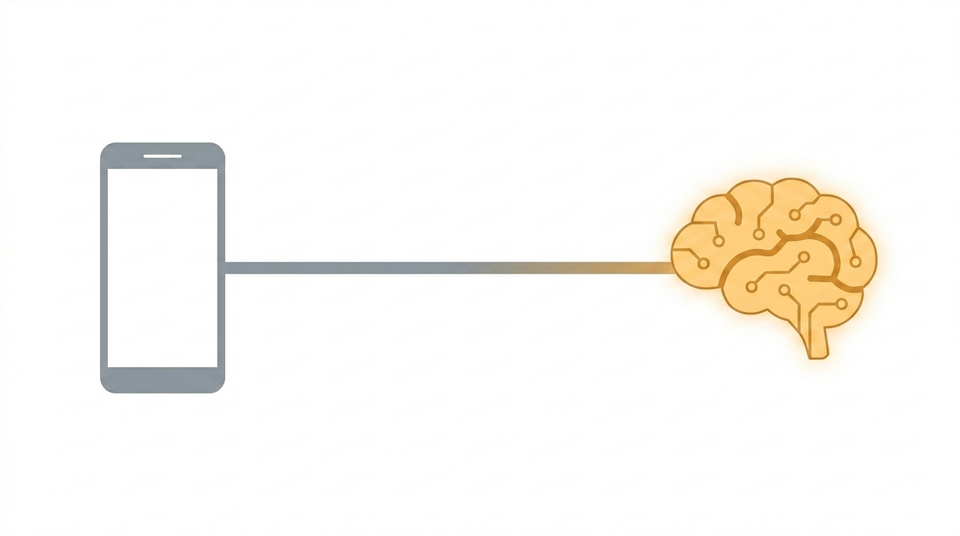
The phone is the most important piece of computing hardware in most people's lives. Whoever controls the phone controls the relationship between the user and AI. Right now Apple and Google control that relationship and OpenAI is a tenant in their buildings, playing by their rules.
Building its own phone is OpenAI's attempt to own the relationship directly.
As Kuo put it: only by fully controlling both the operating system and hardware can OpenAI deliver a truly comprehensive AI agent experience. Smartphones also capture something uniquely valuable — your full real-time context. Where you are, what you're doing, what you've said, what's on your calendar. That context is what transforms AI from a capable chatbot into something genuinely useful as an assistant. You can't get it if you're just an app.
To put the scale of ambition in context: Kuo's report suggests OpenAI is targeting annual shipment volumes of 300 to 400 million units. Apple ships around 220 million iPhones a year. That number is either an extraordinary statement of confidence or a reminder that analyst projections for unbuilt products should be taken lightly — probably both.
The two devices — and how they fit together
It's worth clarifying that OpenAI is working on two different hardware products, and they're distinct.
The first — further along and expected to arrive later this year or early 2027 — is the screenless companion device being built with Jony Ive, the designer who gave the world the iPhone, iPod, and iMac. It's pocket-sized, voice-first, always on, with cameras and microphones but no screen. Altman has described it as having a vibe like "sitting in the most beautiful cabin by a lake" — peaceful, simple, unobtrusive. Think of it as an AI that lives in your pocket and quietly handles things for you.
The second — today's news — is a full smartphone. This one is further out (2028) and more ambitious. The interface described in Kuo's report looks nothing like a regular phone. Instead of a grid of app icons, it's organized around tasks and their completion status. Pending actions, things in progress, messages that need replies. The phone manages your life rather than asking you to manage it.
Together, the two devices sketch OpenAI's vision of what AI hardware could look like: a companion that's always present, and a primary device rebuilt around what AI can actually do.
The obvious comparison — and why it's complicated
The immediate reaction most people will have is: this is like when Amazon built the Fire Phone. Amazon tried to build its own phone in 2014, it was a spectacular failure, and the company quietly killed it within a year.
That comparison is fair to make. Building consumer hardware is genuinely hard, even for companies with unlimited resources. Apple spent decades perfecting it. Google has spent billions and its Pixel phones remain niche.
But there are a few meaningful differences. OpenAI isn't trying to replace the iPhone with a better iPhone. It's trying to create a new category — an AI-first device where the interface itself is fundamentally different. And it has Jony Ive, who arguably understands consumer hardware design better than anyone alive, involved in the product vision.
Whether that's enough to succeed where Amazon, Humane's AI Pin, and others have failed is genuinely uncertain. The 2028 timeline gives them room to figure it out — or to quietly change course if needed.
What this means right now
For most people, nothing changes today. The phone is years away and may never arrive in the form currently described.
But the direction matters. OpenAI has now publicly committed — through Altman's post, through Kuo's detailed supply chain reporting, through two years of hardware development — to the idea that software alone isn't enough. The next phase of AI isn't an app. It's a device that knows your whole life and quietly handles it for you.
Whether that sounds exciting or alarming probably tells you something about your relationship with technology. Either way, it's where things are heading.
HumanReadable-AI covers AI news in plain English every weekday. Subscribe below — free, no jargon, always under five minutes.